 1 / 22
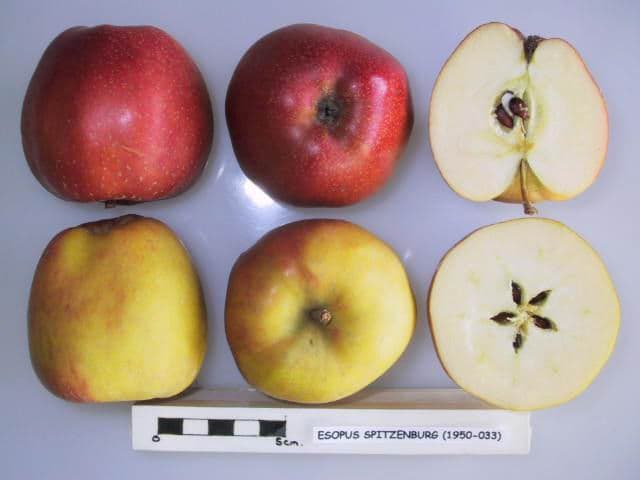
Esopus Spitzenburg
Malus domestica Borkh. Borkh.
Dessert
Measured Phenotype
- Brix
- 14.9 °Bx
- Titratable acidity
- 5.33 g/L
- Juice pH
- 3.50
- Fruit height
- 61.3 mm
- Fruit width
- 63.6 mm
source: GRIN
source: GRIN
source: GRIN
source: NFC
source: NFC
Each value is the highest-precedence :Assertion attached to this cultivar; full provenance (year, evidence type, confidence) is preserved in the graph.
The Esopus Spitzenburg is a highly esteemed dessert apple of outstanding flavor and quality when well-grown, with deep red coloring over yellow. Prized for fresh eating, canning, and general culinary use, it ships well and commands premium prices in market, though it is susceptible to scab and canker and is only a moderate cropper. The fruit ripens between November and February, with excellent keeping quality in cold storage.</description>\n<parameter name="source_quotes">["the standard of excellence for apples of the Baldwin class", "It is a choice dessert fruit and also one of the best apples known either for canning or for general culinary uses", "always sells well", "Originated at Esopus, Ulster county", "was well known in cultivation in this and adjoining states more than a century ago", "Flesh tinged with yellow, firm, moderately fine, crisp, rather tender, juicy, aromatic, sprightly subacid, very good to best", "Season November to February or later"]
Flavor & Texture
Best Uses
17 historical watercolors from the USDA Pomological Watercolor Collection (1886–1942) included in the gallery above. Public domain.
Lineage
Parents
Where to Pick
- LynOaken FarmsOrleans CountyU-Pick
- Buried Barrel Hard CiderWyoming County
- Crooked Line Farm & OrchardSteuben CountyU-Pick
- Hurd OrchardsOrleans CountyU-Pick
Origin & History
- Status
- commercial
- Origin type
- chance seedling
Disease Resistance
- Apple scab
- susceptible
- Leaf spot
- highly susceptible
Cornell Apple Variety Database.
References
- USDA-NPGS
- PI 588785
- UK National Fruit Collection
- 1903
- Wikidata
- Q3058099
- MUNQ ID
- 522
- Cited authority (Hogg 1851)
- Coxe